
How a Failed Course Led to a Franchise With 3,300 Enrolments a Term
He spent six months on it. Every module planned. Every lesson mapped out.
Then he posted it online and waited.
Zero enrolments. Not one.
That’s how the founder of the kids basketball franchise Little Boomers Basketball started out — not the version most people expect. That failure sits on top of a real question: does a good product sell itself, or does someone have to make people want it?
This is the story behind a recent Courtside Conversations episode by Little Boomers Basketball founder, Emile Koorey.
Watch the Full Episode
The Fear Nobody Says Out Loud
You pour months into something you’re proud of. You launch it.
Nothing happens.
How would that feel? Confusing. Embarrassing. Maybe enough to make you quit for good.
Most first-time founders assume the product will do the talking. That assumption is where businesses quietly die.
Two Halves of Every Launch
Split a launch in half.
On one side: the product. The thing you build, refine, and quietly believe in.
On the other: the offer and the marketing. Getting people to actually want it and hand over their money.
Emile spent six months on the first half of his first business and almost no time on the second. Zero enrolments followed.
At the Little Boomers Basketball franchise, both halves are already worked out before a franchisee opens their doors — the offer, the pricing, the local marketing calendar. You inherit the second half instead of learning it the way Emile did.
What 3,300 Enrolments Actually Prove
Last term, 3,300 kids took part in Little Boomers Basketball programs across the network.
That number isn’t luck, and it isn’t one ad that went viral.
It’s the same founder, doing the thing fully in his control, term after term, since May 2018.
You don’t need to invent a new strategy. You need an offer worth saying yes to, and the discipline to keep showing up.
What Founders Learn the Hard Way
Consistency beats intensity. That’s the whole lesson.
Emile calls it the Core Four: warm outreach, cold outreach, free content, paid ads. Five hours a day, five days a week, whether it felt like it was working yet or not.
The second lesson: speed matters more than people think. A Harvard study of over a million leads found businesses that followed up within an hour were seven times more likely to win the customer. The average business took 42 hours. A quarter never replied at all.
The third lesson: price low before you’ve earned trust. Emile’s grand opening offer barely covered costs. It bought him his first 100 customers, and the data to fix what wasn’t working.
Common Mistakes People Make
“If the product’s good, it’ll sell itself”
It won’t. Emile’s first business proved it — a fully built course, zero enrolments, because nobody outside his head knew it existed.
“Charging more from day one looks more professional”
It also looks like a wall. A high price before you’ve earned trust just keeps new customers out.
“I’ll follow up with that lead later today”
Later is expensive. An hour’s delay can be the difference between winning the work and losing it entirely.
“A one-off sale is still a sale”
It is, once. A business built on one-off sales has to find brand new customers every single morning.
“Marketing is something you ramp up once things slow down”
By the time things slow down, you’re already behind. Marketing has to run whether business feels good or not.
“Once I buy a franchise, the local marketing runs itself”
The playbook is handed to you. Running it in your own territory is still on you.
Key Takeaways
- An irresistible offer beats a “good enough” product every time
- Pricing low at the start isn’t a loss — it buys trust, data and testimonials
- Marketing has to be a daily habit early on, not something to get to eventually
- Following up within the hour can make you seven times more likely to win the customer
- A sticky, recurring service is what makes a business durable long term
- Businesses rarely fail because the product wasn’t good enough — they fail because the marketing stopped
- The best systems are usually someone else’s expensive trial and error, already paid for
FAQ: Common Questions People Ask
Do I need a marketing background to make this work?
No. Emile didn’t have one either — his first business failed without it. As a Little Boomers Basketball franchisee, the offer and the marketing playbook are already built. You’re running a proven system, not inventing one.
What if our grand opening doesn’t get many enrolments?
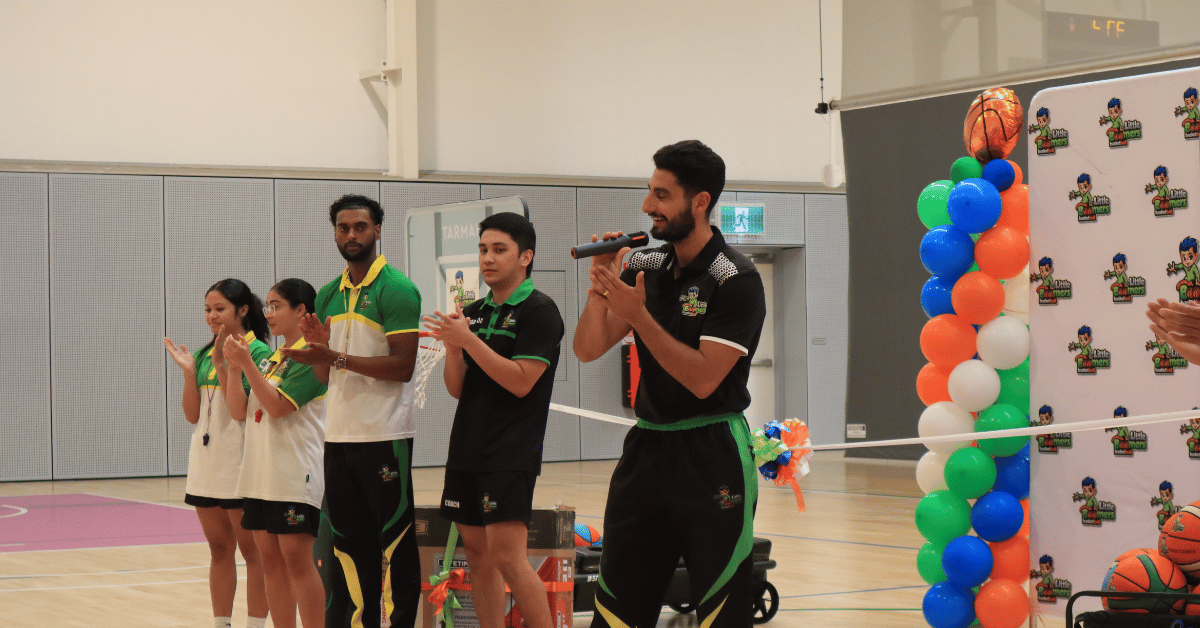
Grand openings across the network have ranged from 48 to 80 enrolments in a single day, using the same low-barrier offer strategy from Emile’s own launch. The system lowers the risk. It doesn’t remove the effort.
How much time does the marketing side actually take early on?
It’s a genuine daily commitment while you build local trust. As renewals kick in, the network average sits around 80 percent — a growing share of each term’s enrolments come from families already inside the program.
Can two of us run this together while raising young kids ourselves?
Yes. Plenty of franchisees run this as a partnership, and many are parents themselves. That’s a large part of why families are drawn to the model in the first place.
Keen to Learn More?
Emile breaks stories like this down every week on his YouTube channel. Good next step if you’re still researching.
You might also find our article on The Hidden Drivers of Franchise Performance Nobody Talks About useful as you weigh up whether franchising is the right fit for you.
If this has you thinking about what building something like this could look like, book a free Discovery Call with Emile.
No pressure, no pitch. Just a conversation to find out if it fits your life.



 Your child’s spot is locked in for the year — no re-enrol stress