Your child wants to try basketball. You’ve never played a game in your life — and you have no idea what to tell them.
Learning how to play basketball for kids starts with three basics: dribbling (bouncing the ball while moving), passing (getting the ball to a teammate), and shooting (aiming for the hoop). Kids’ programs teach these in a structured, fun environment — no prior experience needed from you or your child.
How to Play Basketball: The Basics Parents Need to Know
What Basketball Actually Is
Two teams. One ball. Two hoops.
The goal is to score points by getting the ball through the other team’s hoop. Players move the ball by dribbling (bouncing it as they walk or run) or passing to a teammate.
That’s it. Everything else builds on top of those two things.
For young kids, the rules are simplified — shorter courts, lower hoops, no complicated fouls. The focus is on movement, fun, and basic skill development, not referee calls.
According to Better Health Victoria, structured sport like basketball supports not just physical fitness in children, but confidence, social skills, and resilience. The sport is the vehicle. The development is the destination.
The 3 Core Skills Kids Learn First
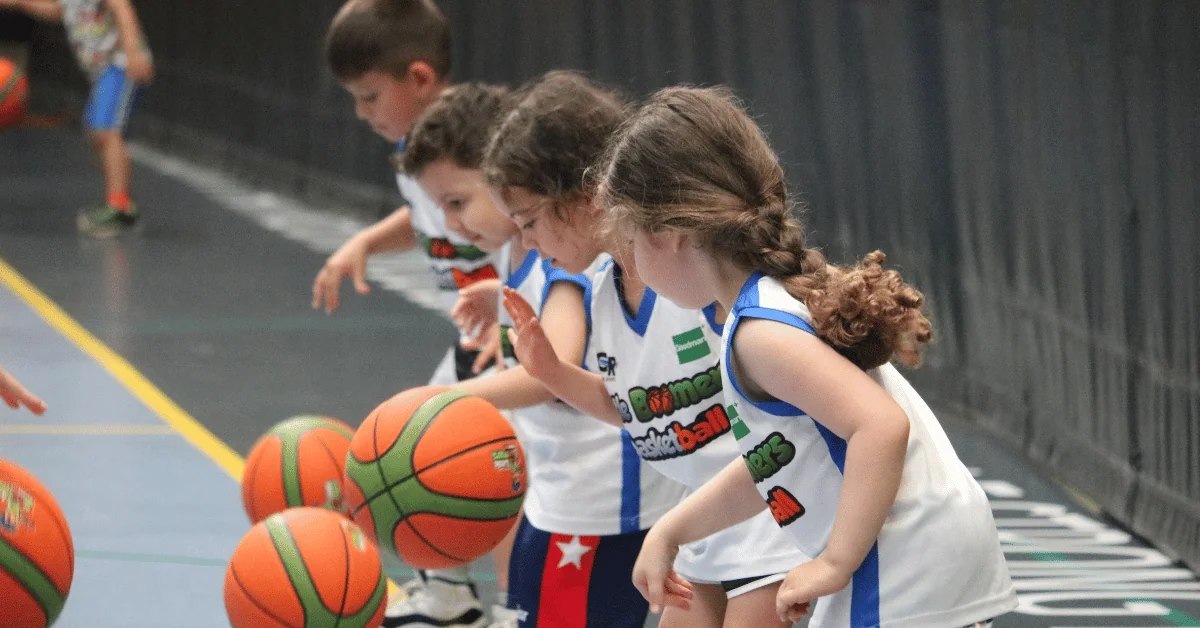
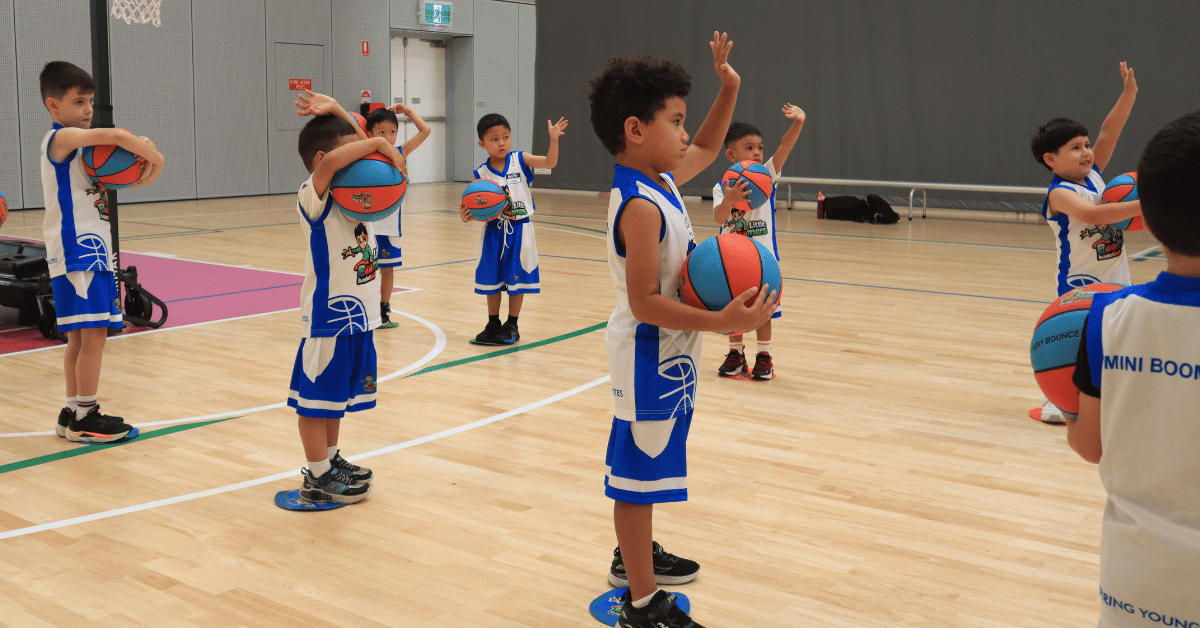
1. Dribbling Bouncing the ball with one hand while moving. It’s harder than it looks at first — and incredibly satisfying when it clicks.
Kids start with stationary dribbling, then learn to move while controlling the ball.
2. Passing Getting the ball from your hands to a teammate’s. Kids learn the chest pass (a two-handed push straight ahead) and the bounce pass (a two-handed pass that bounces on the floor). Reading where your teammate is — and timing the pass — is the real skill.
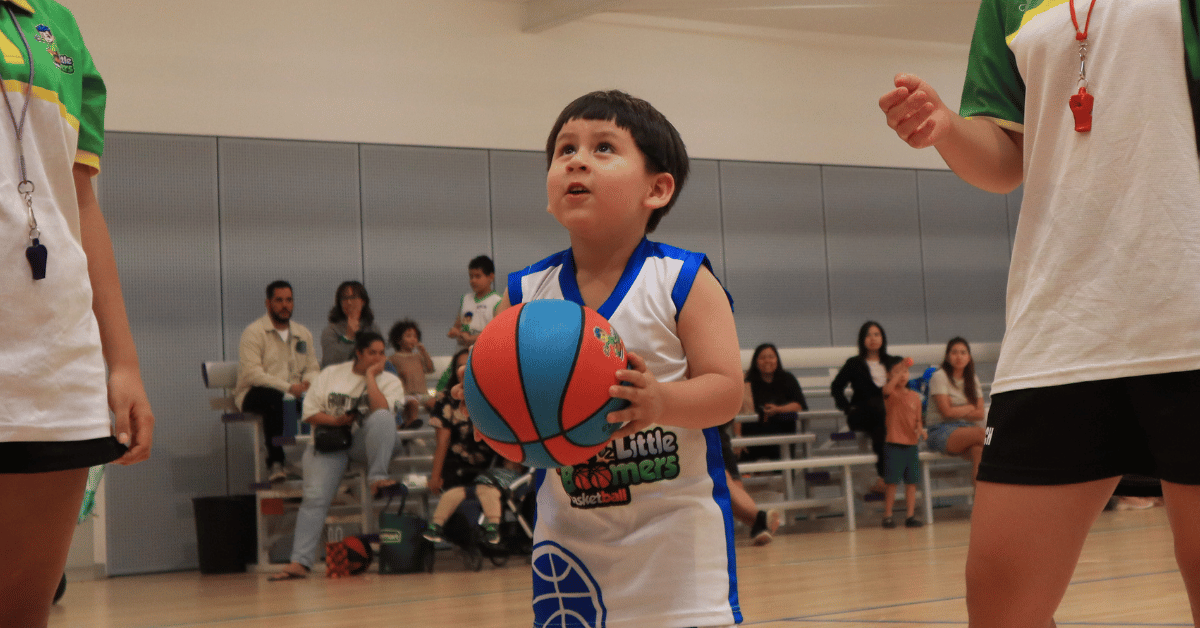
3. Shooting Aiming for the hoop. Correct shooting form involves knees bent, elbows in, and a gentle flick of the wrist at the top.
Kids don’t learn adult-style jump shots — they learn the mechanics that make shooting feel natural over time.
These three skills are the foundation of everything. Once a child has them, every part of basketball opens up.
For a look at what your child’s first session feels like on the day, read First Basketball Class? Here’s How To Set Your Child Up For Success.
How Kids’ Basketball Is Different From What You See on TV
Smaller Courts. Lower Hoops. More Fun.
Kids’ basketball isn’t a scaled-down version of the NBA. It’s built from scratch for developing bodies and brains.
Key differences from adult basketball:
- Hoops are lower — adjusted for age group so shooting feels achievable
- Courts are smaller — less running, more skill work
- Rules are simpler — no complex foul systems for younger groups
- Sessions focus on skill, not score — no one “wins” at a preschool basketball session
This design is intentional. Kids learn basketball basics for kids better when the environment removes pressure and creates space for confidence to grow.
Explore all Little Boomers programs by age group.
What a Structured Kids’ Session Actually Looks Like
If you’re picturing your child running free with a ball for 45 minutes — it’s better than that.
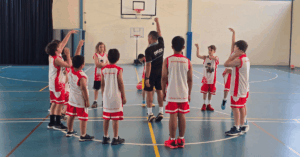
A well-run session breaks down like this:
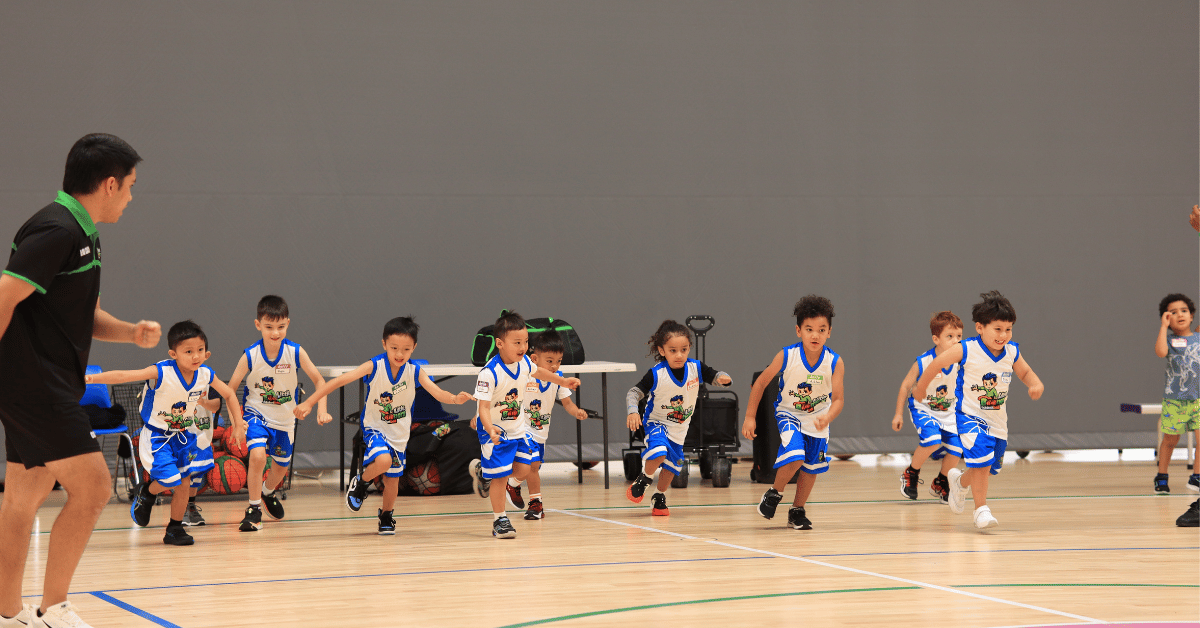
- Warm-up — movement games that get the body ready and the energy up
- Skill work — focused drills on the term’s core technique (dribbling one week, passing the next)
- Game time — applying the skill in a real (simplified) game context
The structure is what makes it work. Kids who just “play” don’t develop the same way as kids who train with intention — even at age 4.
What Parents Worry About (And What Actually Happens)
“What if my child doesn’t understand the rules?”
They won’t — and that’s fine. Basketball rules for children in these programs are introduced gradually. Kids learn by doing, not by sitting through a rules explanation.
“I can’t help my child practice at home because I don’t know how to play.”
You don’t need to. Coaches teach everything in session. If your child wants to practice at home, just encouraging them to bounce the ball is enough.
“What if my child gets frustrated when they can’t do something?”
Every coach at Little Boomers is trained to handle exactly this — turning “I can’t do it” moments into “watch me do it again” moments. It’s one of the most valuable parts of the program.
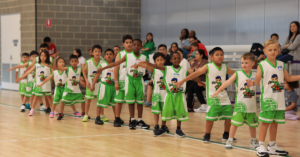
How Little Boomers Teaches Kids Basketball from the Ground Up
A Curriculum Built for Beginners
Every Little Boomers term follows a skill-based curriculum — building from session one to session eight in a progression that makes sense for the age group.
A child starting with zero basketball knowledge in Week 1 is dribbling confidently in games by Week 4. By Week 8, they’re passing, shooting, and asking when the next term starts.
That’s not luck. That’s structure.
The Coaches Who Make It Click
Basketball skills for beginners are only as good as the person teaching them.
Every Little Boomers coach is accredited, qualified, and trained in youth development. They don’t just run drills — they notice which child needs encouragement, which one needs a challenge, and which one just needs someone to believe in them.
More than 10,000 Australian families. 400+ five-star Google reviews. A 75–80% term renewal rate.
Join the families who found something that actually sticks.
Ready to help your child grow in confidence, make friends, and love basketball? Find classes near you — limited spots this term.
FAQ: How to Play Basketball for Kids
1. Do I need to teach my child anything before they start?
Not a thing. Sessions start from absolute zero. Coaches cover everything — your child just needs to show up ready to have fun.
2. At what age can kids start learning basketball?
From age 3. The Preschoolers program introduces movement, coordination, and basic ball skills in a way that’s completely appropriate for very young children.
3. How long before my child can actually play a real game?
By the end of one term (8 sessions), most kids have enough skills to participate in simplified game formats. Full game understanding develops over multiple terms.
4. My child is 10 and has never played. Is it too late to learn the basics?
Not at all. The Mighty Boomers program (ages 9–12) is specifically designed for this age group, including kids who are brand new to the sport.
5. How do I know which program is right for my child’s age?
Take the program quiz — it takes under a minute and matches your child to the right group.
Key Takeaways
- Basketball for kids is built on three core skills: dribbling, passing, and shooting — all teachable from age 3
- Kids’ basketball uses lower hoops, smaller courts, and simpler rules designed for developing bodies and brains
- A structured session mixes skill work and game time — not just free play
- No prior knowledge required from parent or child — coaches teach everything from the ground up
- Little Boomers programs are age-split, beginner-friendly, and backed by 400+ five-star Google reviews
You don’t need to know how to play basketball to give your child the gift of learning it. You just need to find the right place to start.
Find your nearest Little Boomers class and book a spot this term — skills for sport, skills for life.
 Your child’s spot is locked in for the year — no re-enrol stress